
A puppy showing signs of parvo needs veterinary attention within hours, not days. Canine parvovirus (CPV) attacks the intestinal lining and bone marrow so aggressively that untreated puppies have a survival rate below 10%, and even treated cases can turn critical within 48 to 72 hours of the first symptom. If your puppy is vomiting, has bloody diarrhea, or seems suddenly lethargic, the safest assumption is that this is an emergency until a veterinarian tells you otherwise.
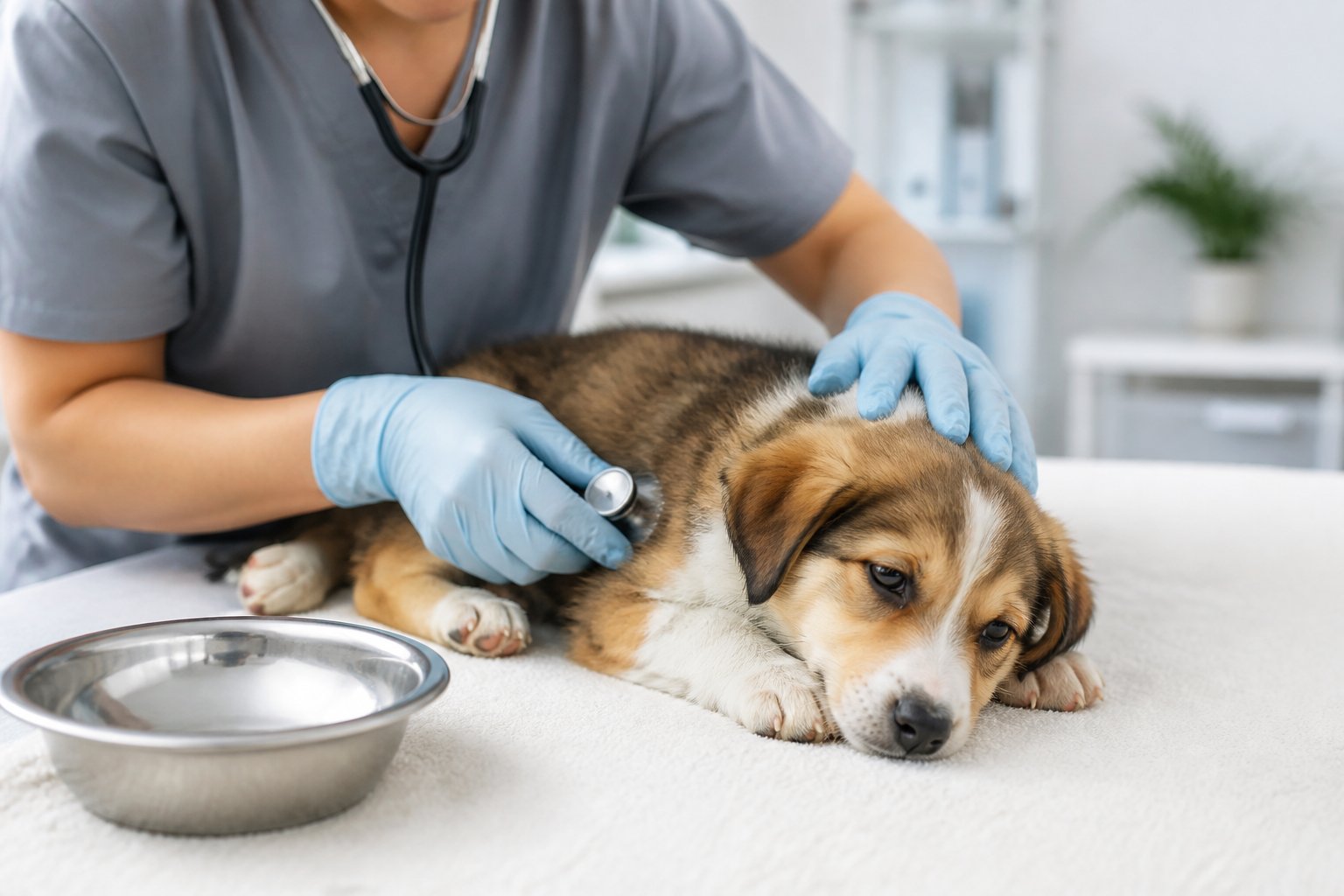
Parvoviral enteritis spreads through contact with infected feces, contaminated surfaces, or even the shoes of someone who visited a place with sick dogs. Puppies between six weeks and six months old carry the highest risk because maternal antibodies fade before their own vaccine-driven immunity is complete. This guide walks through what parvovirus infection looks like at each stage, what a veterinary team will likely do to diagnose and treat it, and which steps you can take right now if you suspect your puppy has been exposed.
Early Warning Signs and Emergency Red Flags
Parvo symptoms in puppies typically begin three to seven days after exposure, starting subtly before escalating into a medical crisis. Recognizing the pattern early, rather than waiting for it to worsen, gives your puppy the best chance at survival.
The First Changes Owners May Notice
Lethargy and loss of appetite are usually the first signs of parvo, appearing before digestive symptoms start. A puppy that suddenly seems withdrawn, uninterested in food, or reluctant to play deserves attention, especially if they are unvaccinated or mid-way through their vaccine series.
Some puppies also run a mild fever in this early window. It's easy to mistake these signs for a minor stomach upset or a tiring day of play, which is part of what makes parvo so dangerous to catch late.
Vomiting, Diarrhea, and Abdominal Pain
Vomiting and diarrhea follow within a day or two of the initial lethargy, often arriving together. The diarrhea frequently turns watery, then progresses to bloody diarrhea with a distinctive, strong odor that many veterinarians describe as unmistakable once you've smelled it.
Abdominal pain often accompanies these symptoms; a puppy may whine when picked up, hunch its back, or resist having its belly touched. Fever can shift into hypothermia as the illness advances, which signals the body is struggling to compensate.
When Bloody Stool, Weakness, or Collapse Signals an Emergency
Bloody stool combined with weakness, an inability to stand, or collapse means your puppy needs emergency care immediately. These signs point toward severe dehydration, electrolyte imbalance, and potentially shock or septic shock, where the body's organs stop receiving adequate blood flow.
At this stage, minutes matter. A puppy that is collapsed, has pale or cold gums, or won't respond normally needs transport to an emergency veterinary clinic without waiting for a regular appointment.
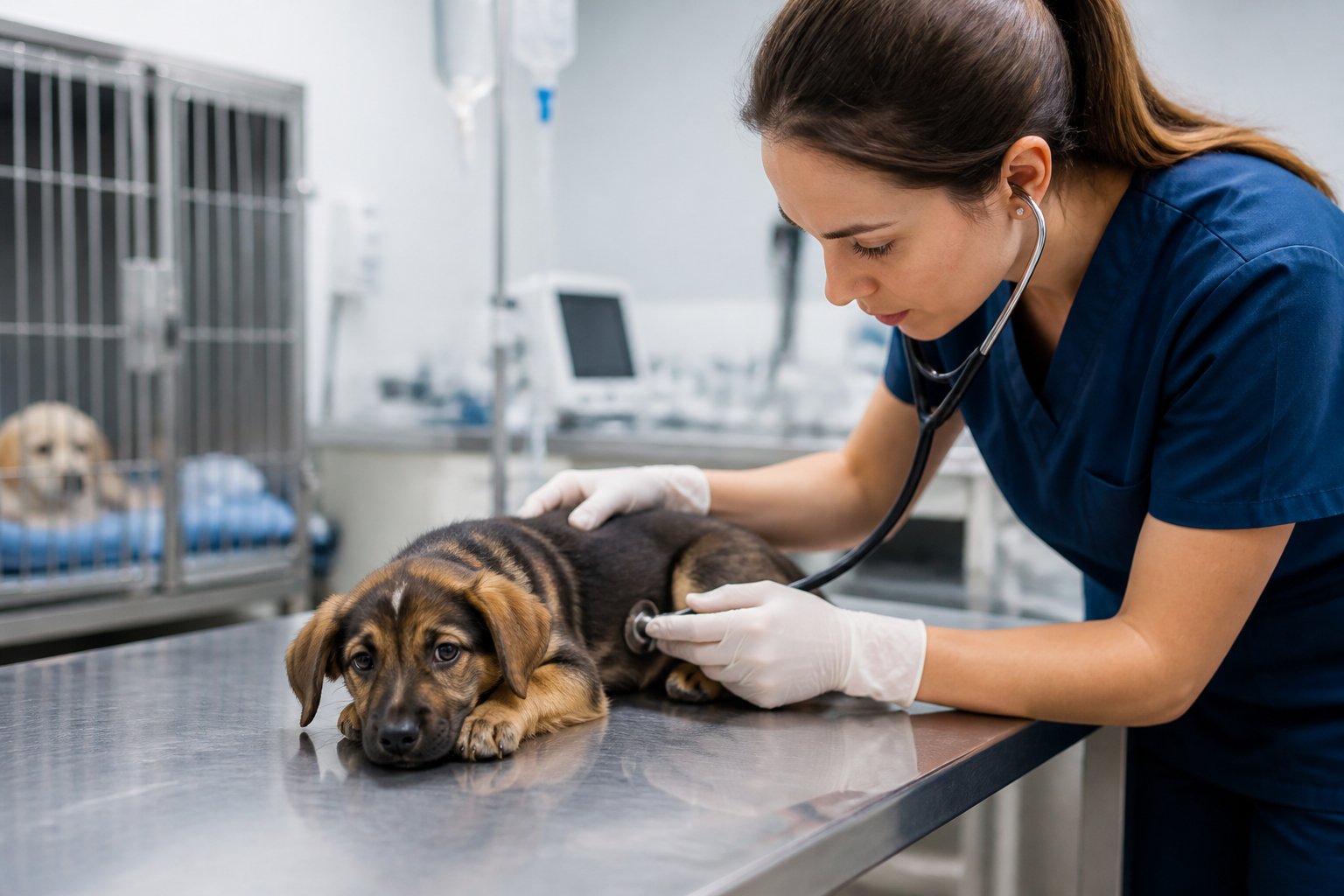
Symptom-and-Action Guide for Puppy Owners
|
Symptom |
What It May Mean |
Recommended Action |
|---|---|---|
|
Lethargy, reduced appetite |
Early-stage infection |
Call your vet same day; monitor closely |
|
Vomiting, mild diarrhea |
Progressing gastrointestinal illness |
Seek veterinary evaluation within hours |
|
Bloody diarrhea, fever |
Active parvoviral enteritis likely |
Go to a vet or emergency clinic immediately |
|
Weakness, cold gums, collapse |
Severe dehydration or shock |
Emergency care now, no delay |
What to Do If You Suspect Parvo
Contacting a veterinarian immediately is the single most important action if your puppy shows any combination of these symptoms. Every hour without treatment increases the risk of severe dehydration, secondary infection, and death, particularly in unvaccinated puppies.
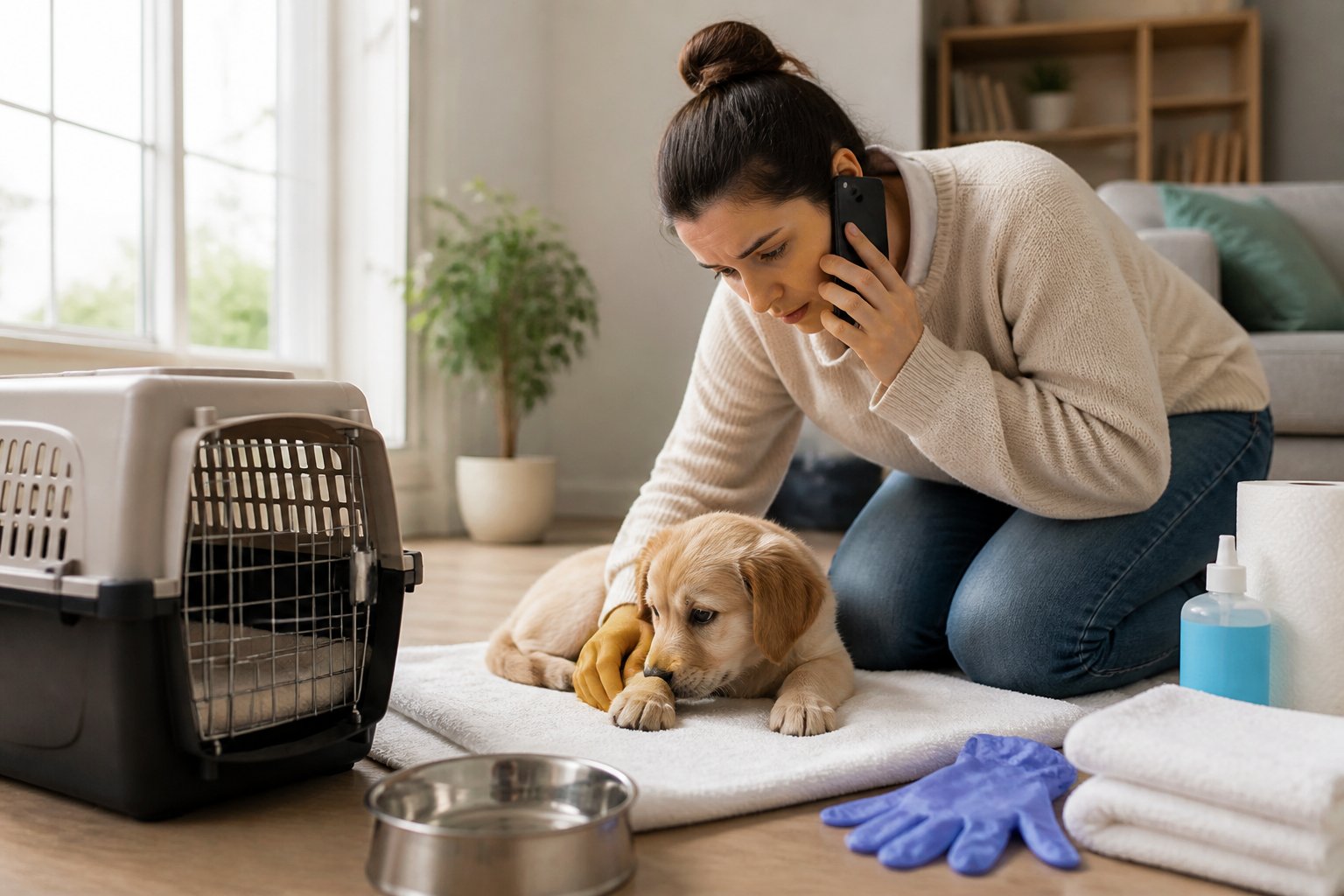
Call a Veterinarian or Emergency Clinic Without Delay
Phone ahead before arriving so the clinic can prepare an isolation area. Describe the symptoms clearly: onset time, vomiting frequency, whether diarrhea is bloody, and your puppy's vaccination history.
Bring a fresh stool sample if you can collect one without delaying travel; it speeds up in-clinic testing. Do not wait to "see if it gets better" since untreated parvo can escalate within a single day.
How to Limit Exposure to Other Dogs
Keep your puppy away from other dogs, shared yards, and public spaces until a veterinarian rules out parvo. If you have other dogs at home, separate the sick puppy in a room that can be disinfected afterward, and avoid letting unvaccinated puppies or unvaccinated dogs near the same space.
Carry your puppy to the car rather than letting them walk across areas other dogs frequent. Parvovirus particles on grass, pavement, or bedding can infect other animals for months.
What Not to Try at Home Before Veterinary Advice
Do not give human anti-diarrheal or anti-nausea medications, withhold water hoping symptoms resolve, or attempt to rehydrate a severely lethargic puppy with oral fluids alone. A puppy in shock cannot absorb fluids given by mouth, and delaying professional care to try home remedies reduces survival odds.
Skip unproven online remedies circulating in pet forums. Veterinary diagnosis and IV fluid therapy address the dehydration and complications that home care cannot.
How Puppies Catch Parvo and Which Dogs Face the Highest Risk
Canine parvovirus spreads primarily through contact with infected feces, and it survives in the environment for months, sometimes over a year outdoors. A puppy doesn't need direct contact with a sick dog; sniffing contaminated grass, a shared water bowl, or a visitor's shoes can be enough.
Fecal Contamination and Long-Lived Environmental Virus
Infected puppies shed CPV-2 in their stool starting a few days after exposure and continuing for up to ten days after they appear clinically recovered. The virus resists many standard cleaners and can persist indoors for a month or longer, and considerably longer outdoors in shaded, undisturbed soil.
The Immunity Gap During Puppyhood
Maternal antibodies protect newborn puppies for the first several weeks, then decline before the puppy's own vaccine-induced immunity fully develops. This immunity gap, typically between six and sixteen weeks of age, is when most parvo cases occur.
Vaccinated puppies can still be vulnerable during this window if maternal antibodies interfere with the vaccine's effectiveness, which is why the multi-dose DHPP series matters more than a single shot.
Vaccination Status, Age, and Breed Considerations
Unvaccinated puppies face by far the greatest risk, but certain breeds show higher susceptibility even with vaccination, including Rottweilers, German Shepherds, Doberman Pinschers, and American Staffordshire Terriers. Researchers suspect a genetic component affecting immune response in these breeds.
Puppies under six months remain the primary risk group, though unvaccinated adult dogs can contract parvo too.
Cleaning Contaminated Areas Safely
A diluted bleach solution (1 part bleach to 30 parts water) is one of the few disinfectants proven effective against parvovirus on non-porous surfaces. Apply it to floors, kennels, food bowls, and any hard surface a sick puppy has touched, and let it sit for at least ten minutes before rinsing.
Porous materials like carpet and soil are harder to fully decontaminate; discarding heavily contaminated bedding or toys is often safer than trying to clean them.
How Veterinarians Diagnose and Treat the Illness
Veterinarians diagnose parvo using a combination of a fecal ELISA test, bloodwork, and clinical symptoms, then treat the illness with supportive hospital care rather than a drug that kills the virus directly. Recognizing what testing can confirm and what recovery actually involves helps you understand what to expect at the clinic.
What a Parvo Test Can and Cannot Confirm
The ELISA fecal test delivers results in under 15 minutes by detecting parvovirus antigens in a stool sample, making it the standard first-line parvo test in most clinics. It can occasionally produce a false positive, so veterinarians may follow up with a PCR test through an outside lab for confirmation in ambiguous cases.
A negative ELISA result doesn't fully rule out infection, especially early in the illness before shedding peaks, which is why vets pair testing with clinical judgment.
Blood Work and Complications Veterinarians Monitor
Blood work showing a low white blood cell count strongly supports a parvo diagnosis, since the virus attacks bone marrow and rapidly dividing cells. Veterinarians also check for intestinal parasites, electrolyte imbalances, and signs of secondary infection or early organ failure that could complicate recovery.
Repeated blood tests during hospitalization track whether the puppy is stabilizing or heading toward sepsis, which changes the treatment plan quickly.
Hospital Care, Fluids, and Medications
Hospitalization with intravenous fluids is the backbone of parvo treatment, correcting dehydration and electrolyte imbalance that oral fluids cannot fix in a vomiting puppy. Antiemetics such as maropitant (Cerenia) or ondansetron control nausea, while broad-spectrum antibiotics guard against secondary bacterial infection through the damaged intestinal wall.
Pain management is part of standard care, since abdominal pain and intestinal inflammation are common. Some clinics now offer CPMA (Canine Parvovirus Monoclonal Antibody), a newer treatment that binds to the virus and may shorten illness duration when given early in mild to moderate cases.
Nutrition and Recovery After Stabilization
Bland, easily digestible food is reintroduced gradually once vomiting stops, sometimes through a feeding tube if the puppy cannot yet eat on its own. Rushing this step can trigger a relapse of vomiting or diarrhea, so veterinarians usually advance the diet in small, monitored increments.
Most puppies that survive the first three to four days of intensive treatment recover fully, though the intestinal lining needs time to heal completely.
What Affects Parvo Treatment Cost
Parvo treatment cost varies with hospitalization length, the medications required, and whether complications like sepsis develop. Multi-day inpatient care with IV fluids, antiemetics, and antibiotics costs significantly more than outpatient management with subcutaneous fluids for milder cases caught early. Asking your veterinarian for a written estimate before treatment begins helps you understand the likely range for your puppy's specific case.
Fast Veterinary Care and Vaccination Offer the Best Protection
Prompt veterinary treatment combined with a complete DHPP vaccine series gives puppies the strongest defense against parvovirus. The parvo vaccine is typically given as part of the DHPP series at 6, 8, 12, and 16 weeks, with the final dose in that window being critical since it's timed to work after maternal antibodies fade.
Skipping or delaying doses in the puppy vaccination schedule leaves a puppy exposed during exactly the period when parvo risk is highest. Keeping puppies away from unfamiliar dogs and public dog areas until the series is complete adds another layer of protection during those vulnerable weeks.
Frequently Asked Questions
What are the earliest signs of parvo in a puppy?
The earliest signs are usually lethargy and a sudden loss of appetite, appearing before vomiting or diarrhea develop. These changes can look subtle at first, which is why any unexplained drop in energy or interest in food in an unvaccinated or partially vaccinated puppy warrants a same-day call to your veterinarian.
Can vaccinated puppies still get parvo?
Vaccinated puppies can still contract parvo, particularly if they haven't completed the full DHPP series or if maternal antibodies interfered with an earlier dose. Full protection generally isn't reliable until one to two weeks after the final scheduled shot, so exposure risk remains during the vaccination window.
How quickly can parvo become life-threatening?
Parvo can become life-threatening within 48 to 72 hours of the first visible symptoms, largely due to rapid fluid loss from vomiting and diarrhea. Puppies showing bloody diarrhea, weakness, or collapse need emergency veterinary care the same day symptoms appear.
Can I treat a puppy with suspected parvo at home?
Suspected parvo requires veterinary diagnosis and treatment; home care alone is not a substitute for IV fluids and hospital monitoring. Attempting to manage symptoms with over-the-counter remedies or oral fluids delays the professional care that determines survival.
How long should a puppy recovering from parvo be isolated?
Puppies recovering from parvo should stay isolated from other dogs for at least two weeks after symptoms resolve, since viral shedding can continue for up to ten days after clinical recovery. Your veterinarian can confirm when it's safe to reintroduce your puppy to other animals based on their specific recovery progress.
0 comments